Sustainable WASTEWater Treatment with HIGH PERFORMANCE Boron-Doped Diamond Electrodes

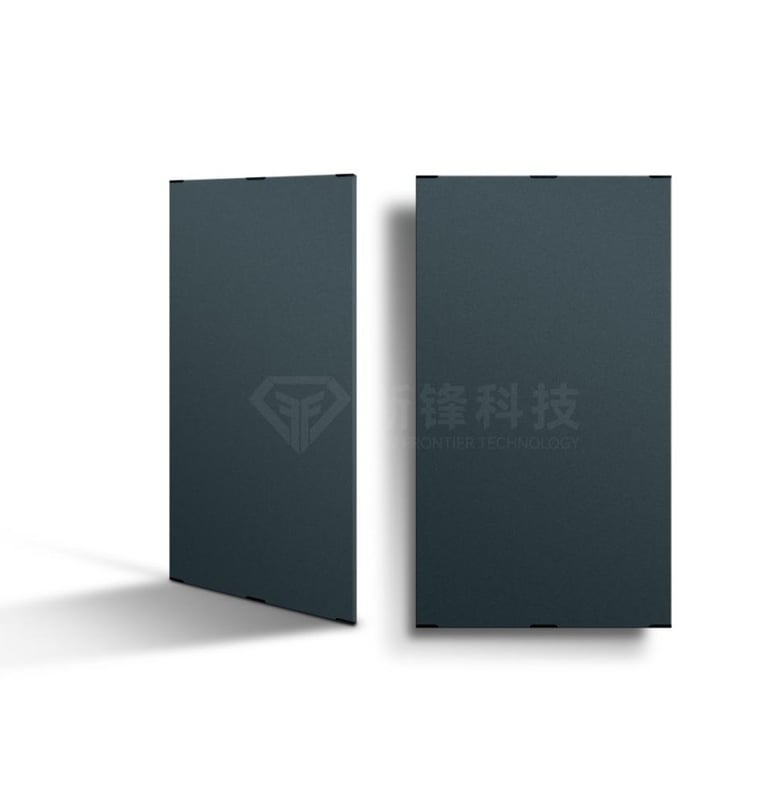
BDD Electrode Plate Optimal Electrochemical Oxidation Anode
Short Description:
At New Frontier tech, our generations of researcher obtain high quality diamond film by chemical vapor deposition from a carbon precursor and hydrogen gas mixture. To change the conductivity value of diamond film, a boron-based component is added to the gas mixture during diamond deposition. A fine adjustment of boron precursor flow allows us to deposit diamond film with variable conductivity. Through innovative breakthroughs in boron-doped diamond (BDD) thin-film technology and solutions to traditional technical challenges, we've developed a new generation of high-performance BDD electrode materials available in multiple specifications. This achievement results from our rigorous manufacturing process featuring precise pretreatment, controlled CVD parameters, and optimized post CVD treatments.
Main features:
◎ Remarkable Chemical and Structural Stability
Diamond exhibits exceptional resistance to chemical reactions, maintaining its integrity even under highly corrosive conditions (such as strong acids or bases), thanks to its rigid sp³ carbon lattice. This ensures reliable performance in extreme environments over extended periods.
◎ Minimal Residual Current
Boron-doped diamond (BDD) electrodes demonstrate negligible non-faradaic currents, which enhances measurement precision in applications requiring high sensitivity, such as detecting low-concentration biomarkers or environmental pollutants.
◎ Extended Electrochemical Stability Range for Water Splitting
Unlike traditional electrodes (e.g., platinum or glassy carbon), diamond remains stable at both highly oxidizing and reducing potentials, facilitating efficient water electrolysis (including oxygen and hydrogen generation) without material breakdown.
◎ Wide-Range Optical Transparency (UV to Far-Infrared)
Ultra-thin diamond coatings allow light transmission across an extensive wavelength range, making them valuable for photonic applications, including ultraviolet detectors, infrared optics, and real-time electrochemical-optical analysis.
◎ Negligible Magnetic Interference
Due to its inherent diamagnetic properties, diamond does not disrupt magnetic fields, making it suitable for integration with MRI systems or experiments involving magnetic field-dependent electrochemical processes.
◎ Superior Biocompatibility (sp³ Carbon Network)
The non-reactive sp³-bonded carbon surface inhibits biological adhesion and immune reactions, rendering it highly compatible with medical implants, neural probes, and in vivo sensing devices.
Application areas: in the product details section
Technical Parameters:
Application areas:
Research shows, BDD electrodes can effectively degrade pollutants in various organic wastewaters:
Intermediate / Papermaking / Pesticide / Leather / Petrochemical / Lithium Battery / Coking / Wine / Smelting / Landfill Leachate / Printing & Dyeing / Others
◎ Extraction agents, such as P204, P507, etc., are mainly used in the lithium battery recycling industry.
◎ Aromatic compounds, heterocyclics and other organic compounds, such as tetrahydrofuran in PT wastewater, are mainly used in the petroleum and coal chemical industries.
◎ Pharmaceutical intermediates, such as pyridine, are mainly used in the pharmaceutical industry.
◎ Phenols, alcohols, esters, such as special phenols, special alcohols, special esters, acetone, etc., are mainly used in the petrochemical industry.
◎ High organic acid wastewater is mainly used in the petrochemical catalyst industry.
◎ Organic solvents such as dichloromethane, chloroform, tetrahydrozoline, etc. are mainly used in the pesticide production industry.
◎ Humic acid in landfill leachate.
Contact
Reach out with questions or project ideas
© 2025. All rights reserved.
Call/Wechat/Whatsapp:
+86 186 70330664
Email: info@bddwater.com